

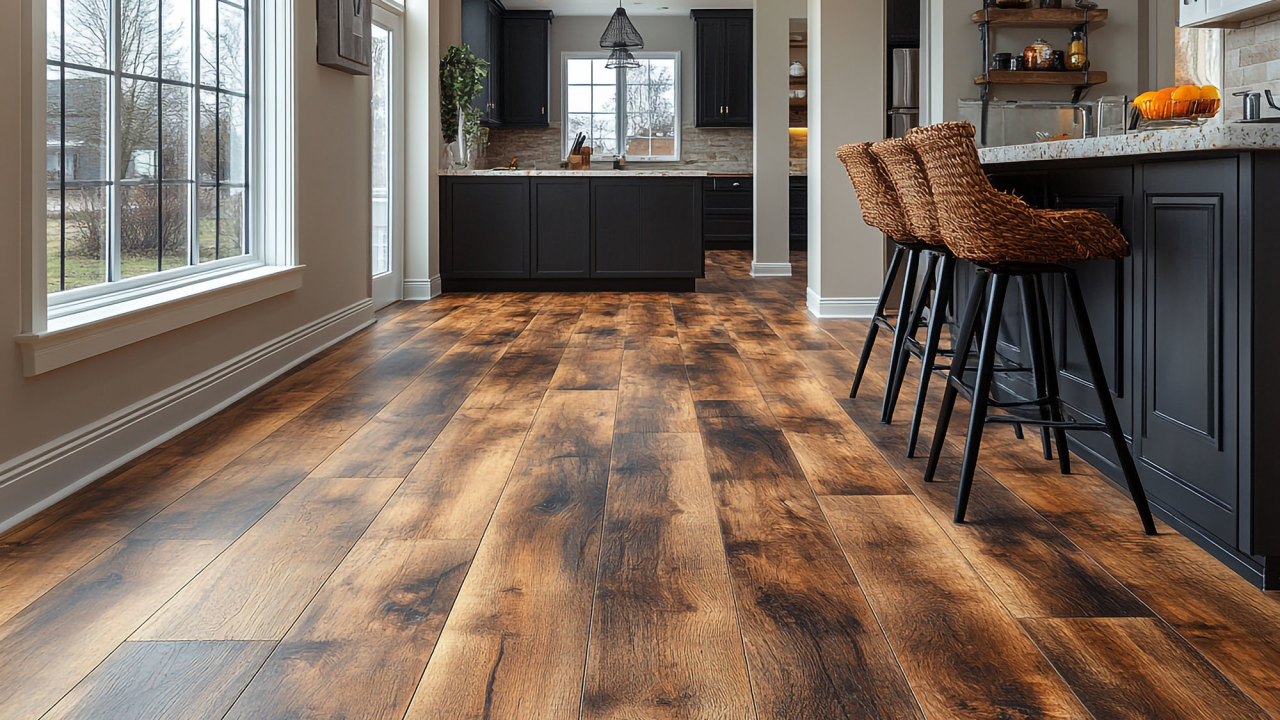
There is a moment, when you walk into a room with truly exceptional hardwood floors, when something shifts. The space feels different — warmer, more intentional, somehow more alive. More often than not, that quality comes from a custom hardwood floor: one that was designed and crafted specifically for that room, that home, and that homeowner.
Custom hardwood flooring isn't just a product. It's the result of a collaboration between a skilled craftsman and a homeowner with a vision. And when done right, it produces something that no mass-produced flooring product can replicate.
What Makes a Hardwood Floor "Custom"?
The term "custom hardwood floor" can encompass a wide range of choices and techniques. At its most basic, a custom floor simply means selecting unfinished hardwood and having it finished on-site with a color, sheen, and texture chosen specifically for your space. At its most elaborate, custom hardwood flooring includes intricate inlays, medallions, borders, parquet patterns, and mixed-species designs that transform a floor into a genuine work of art.
Here are some of the key elements that make a hardwood floor custom:
Species Selection
Standard flooring lines typically offer red oak, white oak, and maple in a few widths. Custom flooring opens the door to a much wider range of domestic and exotic species — walnut, hickory, cherry, ash, Brazilian cherry, teak, Santos mahogany, and more. Each species has its own unique grain character, color range, and hardness profile.
Custom Staining
Factory-finished hardwood comes in a set palette. With a site-finished custom floor, the stain color is mixed and adjusted specifically for your project. This means you can achieve a color that perfectly complements your cabinetry, trim, wall color, and furnishings — rather than settling for "close enough."
Plank Width and Configuration
Custom floors can be made in virtually any width, from traditional 2.25" strips to dramatic 8" or wider character planks. They can also be mixed — alternating widths create a rich, artisanal look that's impossible to achieve with standard flooring products.
Patterns and Inlays
This is where custom hardwood truly separates itself from anything you'll find at a big-box store:
Herringbone — Planks laid at 45° or 90° angles in an interlocking V-pattern. A timeless, sophisticated look with centuries of history in European design.
Chevron — Similar to herringbone but with planks cut at precise angles so the V-pattern aligns perfectly at the point.
Parquet — Geometric arrangements of small wood blocks, often in squares, basketweave, or other patterns.
Borders and medallions — A decorative inlay band around the perimeter of a room, or a central medallion under a dining table or in a foyer, can serve as the focal point of an entire interior design scheme.
Mixed species inlays — Contrasting species used to create graphic patterns, wood rugs, or company logos in commercial spaces.
Custom Finish
On-site finishing gives you complete control over the final appearance. You can choose from oil-based or water-based polyurethane, penetrating oil finishes, hardwax oils, or Swedish-style finishes. Each produces a different look and feel, and a skilled craftsman can guide you toward the option that best suits your lifestyle and aesthetic goals.
The Financial Case for Custom Hardwood Floors
There's a misconception that custom hardwood floors are an extravagance — something beautiful, perhaps, but not a particularly wise financial decision. The data suggests otherwise.
Hardwood floors consistently rank among the top home improvements for return on investment. According to the National Association of Realtors, hardwood floor installation and refinishing regularly appear on the list of projects with the highest cost recovery at resale. Quality hardwood, in particular, tends to command premium pricing — both in terms of the homes it's in and in terms of buyer desire.
A custom hardwood floor also eliminates one of the most common renovation regrets: settling for something that was "fine" rather than exactly right. When you invest in a custom floor, you get a product tailored to your home. Buyers and appraisers notice that kind of quality — and it pays dividends.
Custom Hardwood Floors in New Construction
If you're building a new home, there's no better time to invest in custom hardwood flooring. During the framing stage, before walls are closed in and trim is installed, you have maximum flexibility to run floors in any direction, create seamless transitions between rooms, and plan for inlays and borders without the constraints of working around existing features.
Working directly with a hardwood flooring specialist during the design and construction phase allows you to coordinate the floor with your interior designer, cabinetmaker, and tile contractor — ensuring that every element of the space works together harmoniously. At Ron's Hardwood Floors, we work regularly with builders and homeowners during new construction to deliver floors that are truly integral to the home's design, not an afterthought.
Custom Hardwood Floors in Existing Homes
Custom hardwood flooring isn't just for new construction. In an existing home, a custom floor can transform a space completely — and even connect rooms that may currently have mismatched or dated flooring.
One of the most rewarding projects a hardwood professional can take on is helping a homeowner select a new custom floor that ties together an open-plan space — combining the living room, dining room, and kitchen into a unified, cohesive environment. Getting the species, stain, and plank direction right in that context requires skill and experience. Done well, the result is a home that feels entirely intentional and beautifully composed.
The Craftsmanship Behind Custom Hardwood
Installing and finishing a custom hardwood floor at the highest level is a genuine craft. It requires not only technical knowledge of the materials and tools involved, but also an eye for detail, precision in execution, and experience in problem-solving when the unexpected arises — and in flooring, it always does at some point.
The sanding process alone involves multiple passes with increasingly fine grits, careful edge work, and the ability to blend repairs and transitions seamlessly. Applying stain evenly across a large floor, without lap marks or blotchy areas, requires the kind of technique that only comes with years of practice. And finishing — whether oil-based, water-based, or hardwax oil — is as much an art as a science.
At Ron's Hardwood Floors, our craftsmen bring decades of hands-on experience to every custom project. We approach each job with the care and attention it deserves — because we know that a custom floor is not just a flooring product. It's a statement about who you are and how you live.
How to Get Started with a Custom Hardwood Floor Project
The best place to start is a conversation. Tell us about your space — the room's size, the natural light, the style of your home, the colors you love. Share photos of rooms you admire. Tell us how you live and what your priorities are. From there, we can guide you through the world of species, patterns, stains, and finishes to find the combination that's right for you.
We always begin with an in-home consultation so we can see your space firsthand — because a floor can look completely different depending on the light, the ceiling height, and the surrounding colors and materials. We'll bring samples, talk through options, and give you a clear picture of what's possible.
Let's Build Something Beautiful Together
Your home is a reflection of you, and your floors are one of its most defining features. At Ron's Hardwood Floors, we've been helping homeowners in the Chehalis, WA area create custom hardwood floors that stand the test of time since 1989. With over 35 years of experience and a genuine passion for craftsmanship, we're ready to help you design and install a floor that you'll love for the rest of your life.
Call us today at (360) 748-4906 or visit our showroom at 1817 South Market Boulevard, Suite A, Chehalis, WA 98532 to begin your custom hardwood floor journey. Your dream floor is closer than you think.


